DEGREE: how strongly a decade shows
The small dial to the right of REC. It doesn't change which decade you are in. It changes how much of that decade's wear and tear reaches the picture.
Seven is the decade as written
Every technology and style is a recipe with a strength for each of its defects: how much grain, how much softness, how much the picture weaves, how much the colors bleed. DEGREE 7, the step the camera starts on every time you open it, gives you those strengths exactly as written. Below 7 the defects fade towards a clean picture. Above 7 they grow, the way a reel looks after years of projection or a tape after too many copies.
The caption under the dial reads "7 OF 12" at the start. The step you shot with is saved with each clip and shown on its CLIP card.
The curve
DEGREE multiplies every defect by the same factor, and the factor follows two straight lines that meet at 7.
- From 1 to 7 the strength rises in even steps: a seventh of the written value at DEGREE 1, two sevenths at 2, and so on up to the full value at 7.
- From 7 to 12 it rises more gently, adding 12% of the written value at each step, up to 1.6 times the written value at DEGREE 12. No strength ever goes past the top of its scale.
| DEGREE | 1 | 2 | 3 | 4 | 5 | 6 | 7 | 8 | 9 | 10 | 11 | 12 |
|---|---|---|---|---|---|---|---|---|---|---|---|---|
| Factor | 0.14 | 0.29 | 0.43 | 0.57 | 0.71 | 0.86 | 1 | 1.12 | 1.24 | 1.36 | 1.48 | 1.6 |
The steps above 7 are gentler on purpose. DEGREE 12 should look pushed, like a well-used copy, not broken. And because the curve multiplies, a defect a look doesn't have stays at zero at every step. DEGREE 12 makes a clean 2020s phone video only slightly rougher, and it never puts scratches on a reel that came from the lab without any.
What DEGREE turns up and down
- Film: grain, softness, halation, vignette, flicker, gate weave, slow exposure drift, camera shake, the colored fringes of two-color film.
- Tape and television: color bleed, tape noise, tracking, head-switching noise, timebase jitter, interlace combing, tube bloom, CCD smear, autofocus hunting.
- Digital: compression and macroblocking, sensor noise, rolling shutter, frames dropped by a stream, chromatic aberration, highlight blooming, tone-mapping halos.
- Prints and time: damage, fading, yellowing, silvering, light leaks, flash fall-off and motion blur in the photo styles.
What DEGREE leaves alone
Everything that makes a look what it is stays fixed at every step:
- the medium, the gauge and the color response (an orthochromatic look stays orthochromatic, black and white stays black and white);
- contrast and saturation;
- the color cast of a style, the toning of a print and the tint of a silent reel;
- the frame rate and cadence, and the shape of the picture;
- the print border, its paper texture and halftone screen, and the TV scanlines;
- lens distortion, shallow focus, digital sharpening and noise reduction.
DEGREE and sound
With SOUND on PERIOD, DEGREE also works on the sound, with the same curve. It scales the defects of the medium: the level of the hiss, crackle and hum, the distortion, the wow and flutter, the digital crunch of a 2000s camcorder and the short dropouts of a worn tape.
It does not scale the frequency band. The narrow band of a wax cylinder or a cassette is what that medium was, so an 1890s recording is just as thin at DEGREE 1 as at DEGREE 12. It is only cleaner. More in Period sound.
See it for yourself
The same frame, rendered by the app with five technologies and five styles at three steps. Each name links to that look on its decade page.
Video technologies at DEGREE 1, 7 and 12
Early Hand-Cranked Camera (1890s)



Three-Strip Colour Process (1930s)



Super 8 Saturated Color (1960s)



VHS-C Family Video (1990s)



Standard Smartphone 4K (2020s)



Photo styles at DEGREE 1, 7 and 12
Circular Roll-Film Snapshot (1890s)



Solarized Print (1930s)

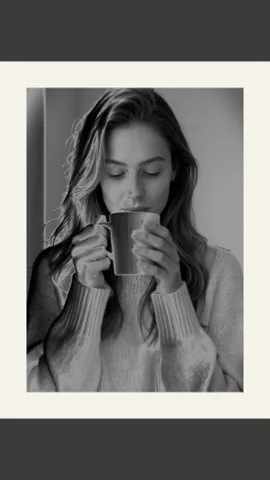
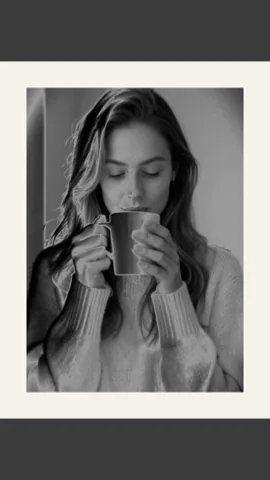
Cube Flash Snapshot (1960s)



Orange Date Stamp Compact (1990s)



Computational Standard (2020s)